
Building what will remain
That's where you'll find me

Monday is Martin Luther King Day here in the United States, and how timely is that?
Violent, systemic oppression of racial minorities and women has been a feature, not a bug, of the United States since its founding. And throughout our history, movements and leaders have emerged to challenge the enforcement of those power hierarchies. Zohran Mamdani quoted one, labor organizer Eugene Debs, in his mayoral inauguration speech. Dorothy Day was another, as was Emma Goldman and César Chávez, though Martin Luther King, Jr. is perhaps the most widely known in that long history.
I’d encourage you to listen sometime this weekend to his final speech before his assassination to fire you up for what is going to be required of all of us in this moment. King was much more radical in his final years than anyone in power at that time, left or right-leaning, was comfortable with, because he sought to connect the dots between race oppression, class oppression, and militarism. He wasn’t interested in incremental reform of fundamentally oppressive systems. Instead, he challenged us to come together across every divide constructed by the powerful to separate us in order to rebuild the very foundations of society.
When you see everyone, from Native American activists, to clergy, to White suburban moms, to young, black musicians, all hitting the streets in Minneapolis to protest the violent incursion of ICE thugs tricked out in paramilitary gear in the Twin Cities, calling out, "ABOLISH ICE!” in unison, you are seeing the continuation of King’s legacy.
Be a part of that continuation. This doesn’t mean you have to attend street protests, necessarily. There are so many other ways to show up. The unsung heroes, the very backbone, of the civil rights movement were the women who, during the Montgomery Bus Boycott, for instance, organized meal delivery, child care, and car pools for workers at risk of losing their jobs. Just like people are organizing grocery delivery and remote schooling for immigrants afraid to leave their homes in Minnesota right now.
Another often unsung hero of the Civil Rights Movement was Dorothy Cotton. Dorothy was the only woman in King’s inner circle at the Southern Christian Leadership Conference. As the Education Director of the SCLC, Dorothy led voter education workshops that covered everything from voter rights and black history to economic empowerment. Dorothy understood that racism was not just about personal racial animus. It was a system of laws, institutions, and social norms that enforced a racialized distribution of resources and power. Marches and street protests were just one way to combat that system. You also had to deprogram people’s minds and hearts, foster solidarity, and build alternative institutions and systems.
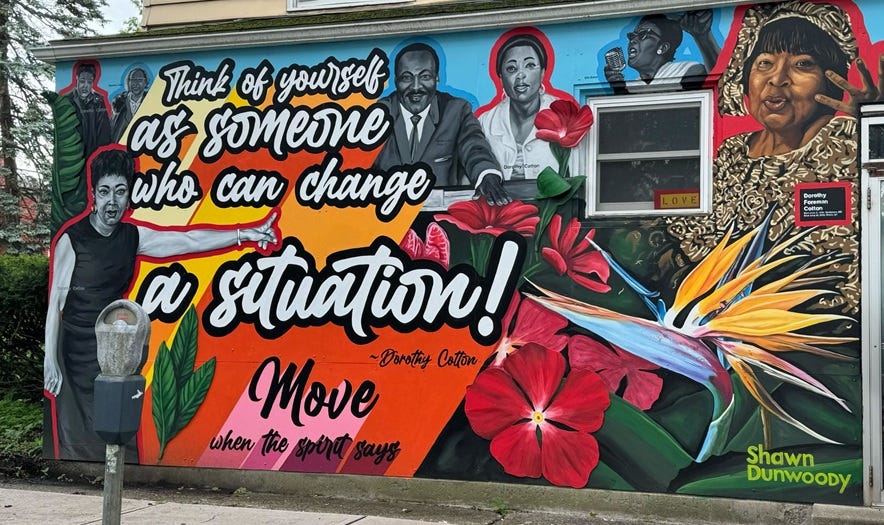
It’s notable to me that, in her memoir If Your Back’s Not Bent, Dorothy described the abuse she and her siblings suffered at the hands of their father. As a result, she understood how oppression is fractal, that it assumes the same shape in families and societies. The personal and political simply mirror each other at different scales.
This means there’s a unique heartbreak in this moment for all of us who have experienced abuse, sexual assault, or domestic violence. Because the private hell we each, I hope, escaped from long ago, has now become our collective, public hell, from which it can feel like there’s no escape at all. The uncontrolled rage and violence of men determined to force submission by any means necessary. The excuses and lies perpetrated by them and the women that aid them. Their turning of culpability on its head.
You made me do it, they proclaim. If you hadn’t been so disrespectful, so mouthy. If you hadn’t challenged my right to say what you get to do, when you get to do it, and how you get to simply be, then I wouldn’t have had to hurt you.
Fucking bitch, Jonathan Ross declared contemptuously, after he shot Renee Good in the face.
It’s been hard, I’ll admit, to get out of bed every morning since Renee was shot (hard on and off since the inauguration), to wade up out of my anxiety-dream-laden sleep and through the fog of waking dread simply to make it through the day.
The only way I’ve found to keep moving is to lean into community, into moments of connection and delight. I sit in my car, Zoom-calling with a friend in Minneapolis, about what is happening there, but also here. How our hearts are faring. That same friend shares the below interview with the singer of Brass Solidarity, a protest group that formed after the murder of George Floyd less than a half-mile from where Renee Good was killed. They’ve continued to make art for and with their community ever since, carrying forward the work of Dorothy Cotton, who believed in the power of voices raised in song to strengthen resolve and fight back despair.
Ain’t gonna let ICE agents turn me ‘round/turn me ‘round/turn me ‘round!
Another Twin Cities friend shares a link to a website for donations to support mutual aid, GoFundMe’s, and organizations. So many there are afraid to go to work, school, the grocery store, and so many others are showing up to care for them via every avenue. The incredible organizing by everyday people who are so determined to protect each other, leaps off the screen. And I can help, even from here. So can you.
Closer to home, I’ve been arriving at work each morning in the cold darkness to find that our new Building Care staff person— a young, white guy, it feels important to my heart to note— has folded the ends of the toilet paper rolls in the bathrooms and the first paper towel on the roll in the kitchenette into little boats, roses, and bows for no discernible reason but delight.
Small delights can get me from one hard day to the next.
I’ve also been continuing to meditate on a quote from Lyz Lenz, which I shared in last week’s newsletter. She called on us to “start building what we hope will remain” after this empire falls. I wrote in response about the integrity with which we should approach whatever we’re choosing to build. But, in hindsight I realize, I didn’t really write about what I’m building. What I’m helping create to sustain me, my chosen family and community.
What are you building? Tell us, please.
In the near-term, I work with our local social justice-oriented, public art project, Ithaca Murals. (That Dorothy Cotton mural is one of ours.) We work with artists and community members to install dozens of new murals every year, all over our city, county, and region. Every new project is formulated to document in vibrant detail, and support, not just who we are as a community, but who we are determined to remain.
We want to see ourselves. We also want anyone else who comes here to see us, too. To see and understand that we are so brimming over with diversity, creativity, and solidarity, it can’t be contained or erased or forced into submission. It’s busting out everywhere.
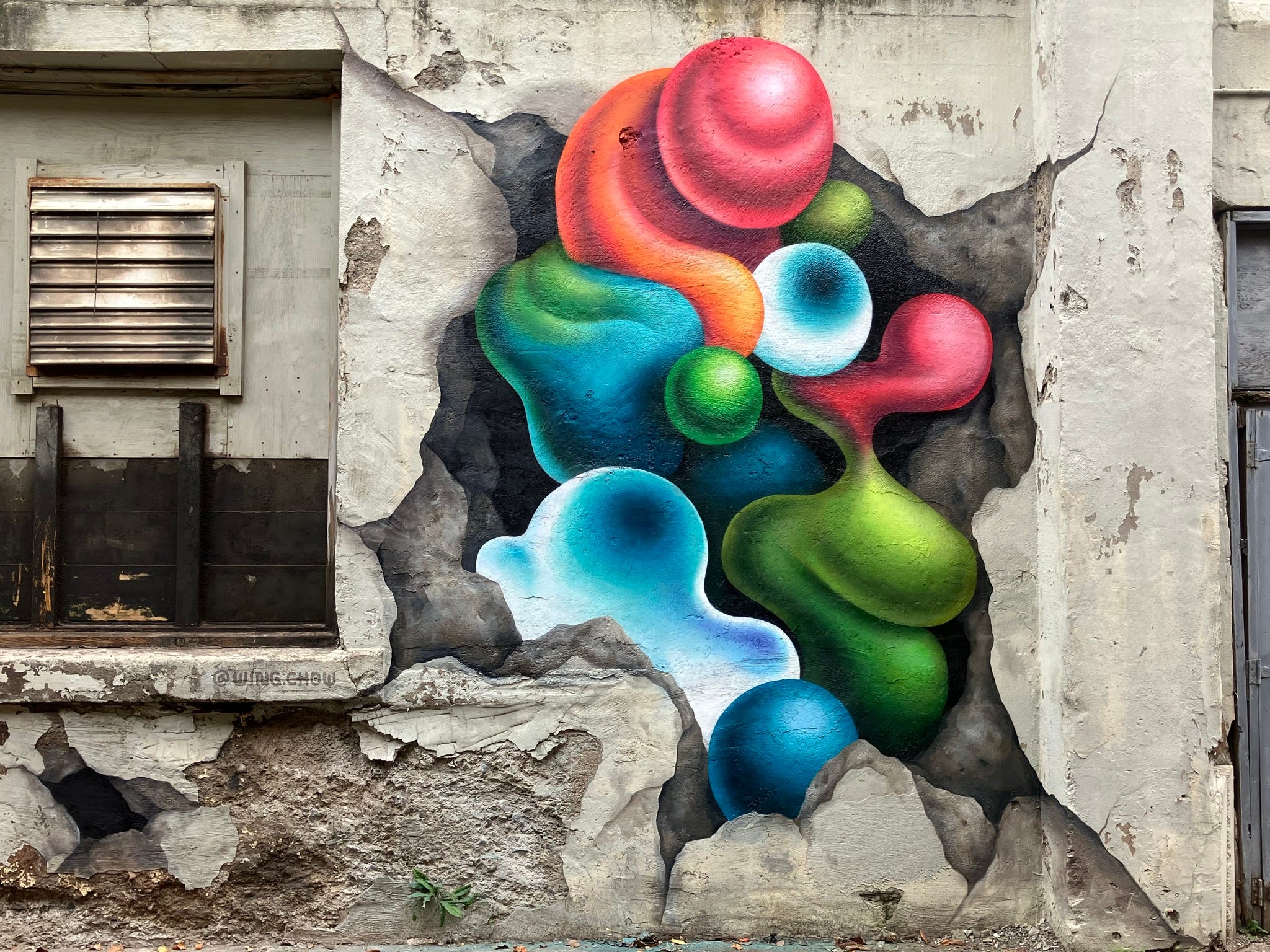
Longer term, I’m building a DIY, off-grid, trans and queer-friendly community with my son, on 37 wooded acres at the tippy top of the Appalachians. Not as an escape from (waves hand around vaguely) all of this, but as an embrace of what we want to remain instead— chosen family and community purpose. Systems and space for sharing resources and labor while living more lightly and creatively on the Earth.
2026 will be our first full calendar year on the land, and I’d like to take you along virtually if you want to come. Below the paywall is the first of a series of videos I plan to make at least monthly (potentially more when the weather’s better) over the next year out on the land. I’ll share the woods, what we’re working on, and all the musing I’m doing as we go. About how to live more sustainably, build and live in community, and approach this second half (final third?) of my life.
This project is deeply personal and, honestly, vulnerable to share, so I’m going to keep the videos for paying subscribers. If you’re not yet a paid subscriber and want to come along for the ride, please join us. If not, no worries. I’ll still be here with free essays every Friday.
Please, first and foremost, take care of yourselves. And as John Lewis (another lion of the Civil Rights Movement) admonished us, make some good trouble when, and however you can.
XO, Asha